
 ⏱ 52 min total
Homemade Egg Pasta
Per 1 serving · 131 g · 4 ingredients
of a 2,000 cal day
- Protein15g18% of calories
- Carbs49g56% of calories
- Fat9.9g26% of calories
- ✓ Sugar free
At a glance
One serving of Homemade Egg Pasta (131 g) has 354 calories, with 15 g of protein, 49 g of carbohydrates and 9.9 g of fat. Most of its energy comes from carbs (56% of calories). It is high in protein (31% DV), thiamine (45% DV) and riboflavin (b2) (48% DV). Keep an eye on sodium and cholesterol, which provide 29% and 123% of the daily value.
High in
20%+ of the daily value
- Protein31%
- Thiamine45%
- Riboflavin (B2)48%
- Niacin23%
- Folate (B9)41%
- Vitamin B1232%
Good source of
10–19% of the daily value
- Vitamin A16%
- Vitamin D13%
- Vitamin B613%
- Zinc13%
- Copper16%
Watch
20%+ of the daily value
- Sodium29%
- Cholesterol123%
Ingredients
For one serving. Tap an ingredient to see its nutrition.


Directions
- 1
To Make the Dough: On a large, clean work surface, pour flour in a mound. Make a well in the center about 4 inches wide. Pour whole eggs, egg yolks, and salt into well and, using a fork, beat thoroughly. When combined, gradually incorporate flour into the eggs until a wet, sticky dough has formed.
- 2
Using a bench knife, scrape excess dough from fork and fingers. Begin to fold additional flour into the dough with the bench knife, turning the dough roughly 45 degrees each time, until dough feels firm and dry, and can form a rough-looking ball, 2 to 5 minutes.
- 3
Press the heel of your hand into the ball of dough, pushing forward and down. Rotate the ball 45 degrees and repeat. Continue until dough develops a smooth, elastic texture similar to a firm ball of Play-Doh. If dough feels too wet, add flour in 1 teaspoon increments. If dough feels too dry, add water slowly using a spray bottle.
- 4
Wrap ball of dough tightly in plastic wrap and rest on countertop for 30 minutes.
- 5
To Roll the Pasta: Meanwhile, place a sheet of parchment paper on a tray or cutting board and dust lightly with flour. Unwrap rested dough and cut into quarters. Set one quarter on work surface and re-wrap remaining dough. With a rolling pin, flatten the quarter of dough into an oblong shape about 1/2 inch thick.
- 6
Set pasta maker to widest setting and pass dough 3 times through the machine at this setting.
- 7
Place dough on a lightly floured work surface. Fold both ends in so that they meet at the center of the dough, and then fold the dough in half where the end points meet, trying not to incorporate too much air into the folds. Using rolling pin, flatten dough to 1/2-inch thick. Pass through the rollers 3 additional times.
- 8
Narrow the setting by 1 notch and repeat Step 7. Repeat once more (the dough should now have passed through the third widest setting). Continue passing the dough through the rollers, reducing the thickness by 1 setting each time until it reaches the desired thickness. It should now be very delicate and elastic to the touch, and slightly translucent.
- 9
Place rolled dough onto a work surface or baking sheet lightly dusted with flour or lined with parchment paper, folding the dough over as necessary so that it fits; sprinkle with flour or line with parchment between folds to prevent sticking.
- 10
Cover dough with plastic wrap or a kitchen towel to prevent drying, then repeat Steps 5 through 9 with remaining dough quarters. If making noodles, cut dough into 12- to 14-inch segments.
- 11
To Cut Noodles: Adjust pasta machine to noodle setting of your choice. Working one dough segment at a time, feed dough through the pasta-cutter. Alternatively, cut folded dough by hand with a chef's knife to desired noodle width.
- 12
Divide the cut noodles into individual portions, dust lightly with flour, and curl into a nest. Place on parchment-lined rimmed baking sheet and gently cover with kitchen towel until ready to cook. Pasta can be frozen directly on the baking sheet, transferred to a zipper-lock freezer bag, and stored in the freezer for up to three weeks before cooking. Cook frozen pasta directly from the freezer.
- 13
To Cook: Bring a large pot of salted water to a rolling boil. Add pasta, stir gently with a wooden spoon, chopsticks, or a cooking fork, and cook, tasting at regular intervals until noodles are just set with a definite bite, about 1 1/2 to 2 minutes. Drain, toss with sauce, and serve.
Vitamins & minerals
Amounts for 1 serving (131 g). Bars show % of the daily value.
Vitamins
| Nutrient | Amount | % Daily Value |
|---|---|---|
| Vitamin A | 145 μg | 16% |
| Vitamin C | 0 mg | 0% |
| Vitamin D | 2 μg | 13% |
| Vitamin E | 1 mg | 7% |
| Vitamin K | 0.4 μg | 0% |
| Thiamine | 1 mg | 45% |
| Riboflavin (B2) | 1 mg | 48% |
| Niacin | 4 mg | 23% |
| Vitamin B6 | 0.2 mg | 13% |
| Folate (B9) | 163 μg | 41% |
| Vitamin B12 | 1 μg | 32% |
| Pantothenic acid | 2 mg | 31% |
| Choline | 286 mg | 52% |
Minerals
| Nutrient | Amount | % Daily Value |
|---|---|---|
| Calcium | 60 mg | 6% |
| Iron | 4 mg | 53% |
| Potassium | 155 mg | 3% |
| Magnesium | 21 mg | 5% |
| Phosphorus | 233 mg | 33% |
| Zinc | 1 mg | 13% |
| Copper | 0.1 mg | 16% |
| Manganese | 0.5 mg | 20% |
| Selenium | 46 μg | 84% |
Full breakdown · 43 more nutrients
| Nutrient | Amount | % Daily Value |
|---|---|---|
| Alanine | 1 g | — |
| Alpha Linolenic Acid (ALA) | 0 g | — |
| Alpha carotene | 6 μg | — |
| Arginine | 1 g | — |
| Aspartic acid | 1 g | — |
| Beta carotene | 16 μg | — |
| Caffeine | 0 mg | — |
| Cystine | 0.3 g | — |
| Docosahexaenoic Acid (DHA) | 0 g | — |
| Docosapentaenoic Acid (DPA) | 0 g | — |
| Eicosapentaenoic Acid (EPA) | 0 g | — |
| Fluoride | 1 μg | — |
| Fructose | 0 g | — |
| Galactose | 0 g | — |
| Glucose | 0.2 g | — |
| Glutamic acid | 3 g | — |
| Glycine | 1 g | — |
| Histidine | 0.4 g | — |
| Hydroxyproline | 0 g | — |
| Isoleucine | 1 g | — |
| Lactose | 0 g | — |
| Leucine | 1 g | — |
| Lycopene | 0 μg | — |
| Lysine | 1 g | — |
| Maltose | 0 g | — |
| Methionine | 0.4 g | — |
| Monounsaturated fats | 4 g | — |
| Phenylalanine | 1 g | — |
| Polyunsaturated fats | 2 g | — |
| Proline | 1 g | — |
| Retinol | 143 μg | — |
| Serine | 1 g | — |
| Starch | 0 g | — |
| Sucrose | 0 g | — |
| Theobromine | 0 mg | — |
| Threonine | 1 g | — |
| Total omega 3 | 0.1 g | — |
| Total omega 6 | 1 g | — |
| Tryptophan | 0.2 g | — |
| Tyrosine | 1 g | — |
| Valine | 1 g | — |
| Vitamin D2 | 0 μg | — |
| Vitamin D3 | 2 μg | — |
Burning 354 calories
Estimated for a 70 kg (154 lb) adult using MET values from the Compendium of Physical Activities.
- 67minWalking (3.5 mph)
- 42minCycling (moderate)
- 29minRunning (6 mph)
- 50minSwimming laps
Common questions
How many calories are in Homemade Egg Pasta?
One serving of Homemade Egg Pasta (1 serving) has 354 calories, which works out to 270 calories per 100 g. That is about 18% of a 2,000-calorie day.
Is Homemade Egg Pasta high in protein?
It provides a solid 15 g of protein per serving (31% of the 50 g daily value), but protein supplies only 18% of its calories, so it is not a protein-dense food. Foods where protein provides 30% or more of calories are generally considered protein-dense.
Is Homemade Egg Pasta keto-friendly?
It is hard to fit into a strict keto diet. One serving has 47 g of net carbs and 56% of its calories come from carbohydrates, while most keto plans cap net carbs at 20–50 g per day.
How much sodium is in Homemade Egg Pasta?
662 mg per serving, which is high (20% or more of the 2,300 mg daily value).
How much sugar is in Homemade Egg Pasta?
0.4 g of total sugars per serving. Labels list total sugars, which include natural sugars from fruit and milk as well as any added sugars.
More recipes
View all 242 calSpiced Pork Tenderloin and Avocado Salsa1 serving
 379 calHawaiian Pineapple Egg Scramble1 serving
 191 calHoney & Lime Rainbow Fruit Salad1 serving
 372 calVegan Walnut Chorizo Tacos with Pineapple Salsa1 serving
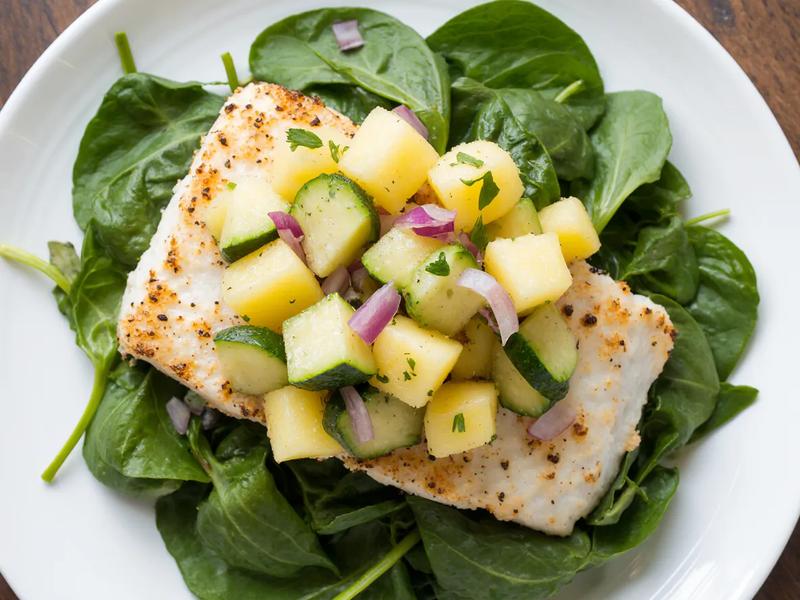 187 calCod with Pineapple Avocado Salsa1 serving
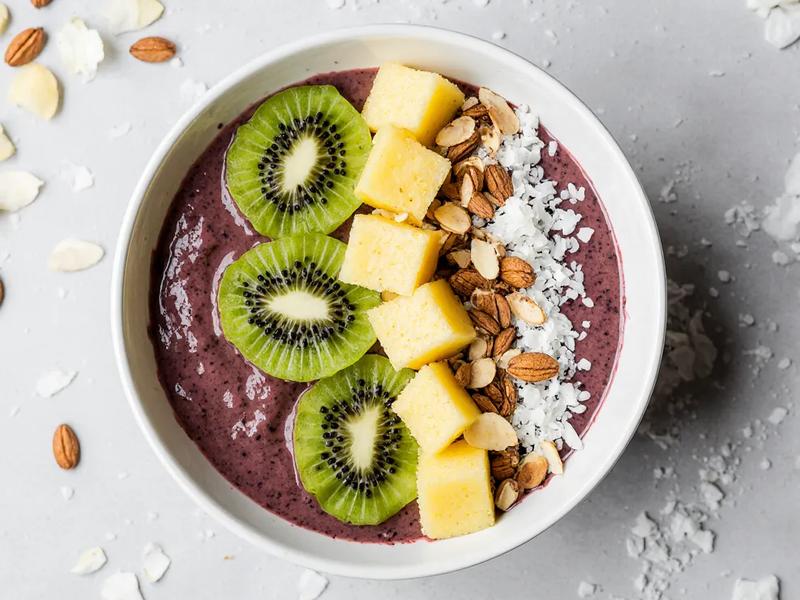 561 calSmoothie Bowl1 serving
 145 calPineapple Ginger Fruit Smoothie1 serving
 468 calVegan Panang Curry with Tofu1 serving