
Scallops with Caponata & Roasted Cauliflower Purée
Per 1 serving · 340 g · 17 ingredients
of a 2,000 cal day
- Protein19g24% of calories
- Carbs22g28% of calories
- Fat17g48% of calories
At a glance
One serving of Scallops with Caponata & Roasted Cauliflower Purée (340 g) has 305 calories, with 19 g of protein, 22 g of carbohydrates and 17 g of fat. Most of its energy comes from fat (48% of calories). It is high in protein (37% DV), Vitamin C (53% DV) and Vitamin K (86% DV). Keep an eye on sodium and saturated fat, which provide 37% and 20% of the daily value.
High in
20%+ of the daily value
- Protein37%
- Vitamin C53%
- Vitamin K86%
- Vitamin B624%
- Folate (B9)20%
- Vitamin B1276%
Good source of
10–19% of the daily value
- Dietary fiber12%
- Vitamin A10%
- Vitamin E15%
- Thiamine11%
- Riboflavin (B2)10%
- Niacin12%
Watch
20%+ of the daily value
- Sodium37%
- Saturated fat20%
Ingredients
For one serving. Tap an ingredient to see its nutrition.
 ¼ tbsp Olive oil
 ¼ head small Cauliflower
- 🥄⅛ tsp Salt
 ½ cloves, minced Garlic
 ¼ tbsp Butter
- ³⁄₁₆ cup 2% milk

 ¾ tbsp Pine nuts
 ⅛ medium Onion
 ⅜ cup cherry tomatoes Cherry tomatoes
- 🥄¹⁄₁₆ tsp Crushed red pepper flakes
 ¹⁄₁₆ cup (not packed) Raisins
 ½ tbsp Red wine vinegar
 ⅓ tbsp, drained Capers
 1 ¼ tbsp Parsley
 ³⁄₁₆ tsp Black pepper
- 1 tsp Olive oil
 4 oz Scallops
Directions
- 1
Preheat oven to 425°F. Line a large rimmed baking sheet with foil and mist with cooking spray. Spread cauliflower on the sheet, mist again, and sprinkle with 1/4 tsp plus 1/8 tsp salt. Roast for 20 minutes, then toss with a spatula.
- 2
Add garlic to the baking sheet and continue roasting until cauliflower is browned and very tender, 15 to 20 minutes more.
- 3
In a food processor, combine cauliflower and butter. Remove skin from garlic and add to the processor. Turn on high and slowly pour milk through the feed tube. Purée until smooth, scraping down the bowl as needed.
- 4
For the caponata, heat a large nonstick skillet on medium. Add nuts and toast, stirring frequently, until golden brown, 3 to 4 minutes. Transfer to a small bowl and set aside.
- 5
Mist the same skillet with cooking spray and heat on medium. Add onion and cook, stirring frequently, until lightly browned and translucent, 4 to 5 minutes. Add tomatoes, remaining 1/8 tsp salt, 1/4 tsp black pepper, and pepper flakes. Cook, stirring frequently, until tomatoes just begin to soften, 3 to 4 minutes.
- 6
Reduce heat to low and add raisins, vinegar, and capers. Stir until combined and heated through, 1 to 2 minutes. Remove from heat and stir in 3 tbsp parsley and nuts.
- 7
Pat scallops dry with a paper towel and sprinkle with remaining 1/2 tsp black pepper. Heat a large heavy skillet on medium-high. Working in two batches, heat half of the oil and add half of the scallops. Cook until the bottom sides are deep golden brown, about 3 minutes. Turn and cook until opposite sides are browned and scallops spring back slightly when pressed in the center, about 2 minutes more. Transfer to a plate and cover to keep warm. Repeat with remaining oil and scallops.
- 8
If cauliflower and caponata have cooled, reheat on low while scallops are cooking. Transfer cauliflower to a medium saucepan if needed. Divide cauliflower, scallops, and caponata evenly among plates and sprinkle with remaining 2 tbsp parsley.
Vitamins & minerals
Amounts for 1 serving (340 g). Bars show % of the daily value.
Vitamins
| Nutrient | Amount | % Daily Value |
|---|---|---|
| Vitamin A | 94 μg | 10% |
| Vitamin C | 48 mg | 53% |
| Vitamin D | 1 μg | 4% |
| Vitamin E | 2 mg | 15% |
| Vitamin K | 103 μg | 86% |
| Thiamine | 0.1 mg | 11% |
| Riboflavin (B2) | 0.1 mg | 10% |
| Niacin | 2 mg | 12% |
| Vitamin B6 | 0.3 mg | 24% |
| Folate (B9) | 80 μg | 20% |
| Vitamin B12 | 2 μg | 76% |
| Pantothenic acid | 1 mg | 19% |
| Choline | 122 mg | 22% |
Minerals
| Nutrient | Amount | % Daily Value |
|---|---|---|
| Calcium | 104 mg | 10% |
| Iron | 2 mg | 24% |
| Potassium | 795 mg | 17% |
| Magnesium | 71 mg | 17% |
| Phosphorus | 520 mg | 74% |
| Zinc | 2 mg | 19% |
| Copper | 0.2 mg | 23% |
| Manganese | 1 mg | 38% |
| Selenium | 17 μg | 30% |
Full breakdown · 43 more nutrients
| Nutrient | Amount | % Daily Value |
|---|---|---|
| Alanine | 1 g | — |
| Alpha Linolenic Acid (ALA) | 0 g | — |
| Alpha carotene | 56 μg | — |
| Arginine | 1 g | — |
| Aspartic acid | 1 g | — |
| Beta carotene | 503 μg | — |
| Caffeine | 0 mg | — |
| Cystine | 0.2 g | — |
| Docosahexaenoic Acid (DHA) | 0.1 g | — |
| Docosapentaenoic Acid (DPA) | 0 g | — |
| Eicosapentaenoic Acid (EPA) | 0 g | — |
| Fluoride | 25 μg | — |
| Fructose | 4 g | — |
| Galactose | 0 g | — |
| Glucose | 4 g | — |
| Glutamic acid | 3 g | — |
| Glycine | 1 g | — |
| Histidine | 0.3 g | — |
| Hydroxyproline | 0 g | — |
| Isoleucine | 1 g | — |
| Lactose | 2 g | — |
| Leucine | 1 g | — |
| Lycopene | 1,438 μg | — |
| Lysine | 1 g | — |
| Maltose | 0 g | — |
| Methionine | 0.4 g | — |
| Monounsaturated fats | 8 g | — |
| Phenylalanine | 1 g | — |
| Polyunsaturated fats | 3 g | — |
| Proline | 1 g | — |
| Retinol | 50 μg | — |
| Serine | 1 g | — |
| Starch | 3 g | — |
| Sucrose | 0.4 g | — |
| Theobromine | 0 mg | — |
| Threonine | 1 g | — |
| Total omega 3 | 0.1 g | — |
| Total omega 6 | 0.1 g | — |
| Tryptophan | 0.1 g | — |
| Tyrosine | 0.5 g | — |
| Valine | 1 g | — |
| Vitamin D2 | 0 μg | — |
| Vitamin D3 | 1 μg | — |
Burning 305 calories
Estimated for a 70 kg (154 lb) adult using MET values from the Compendium of Physical Activities.
- 58minWalking (3.5 mph)
- 37minCycling (moderate)
- 25minRunning (6 mph)
- 43minSwimming laps
Common questions
How many calories are in Scallops with Caponata & Roasted Cauliflower Purée?
One serving of Scallops with Caponata & Roasted Cauliflower Purée (1 serving) has 305 calories, which works out to 90 calories per 100 g. That is about 15% of a 2,000-calorie day.
Is Scallops with Caponata & Roasted Cauliflower Purée high in protein?
It provides a solid 19 g of protein per serving (37% of the 50 g daily value), but protein supplies only 24% of its calories, so it is not a protein-dense food. Foods where protein provides 30% or more of calories are generally considered protein-dense.
Is Scallops with Caponata & Roasted Cauliflower Purée keto-friendly?
It is hard to fit into a strict keto diet. One serving has 19 g of net carbs and 28% of its calories come from carbohydrates, while most keto plans cap net carbs at 20–50 g per day.
How much sodium is in Scallops with Caponata & Roasted Cauliflower Purée?
856 mg per serving, which is high (20% or more of the 2,300 mg daily value).
How much sugar is in Scallops with Caponata & Roasted Cauliflower Purée?
11 g of total sugars per serving. Labels list total sugars, which include natural sugars from fruit and milk as well as any added sugars.
More recipes
View all 379 calHawaiian Pineapple Egg Scramble1 serving
 191 calHoney & Lime Rainbow Fruit Salad1 serving
 372 calVegan Walnut Chorizo Tacos with Pineapple Salsa1 serving
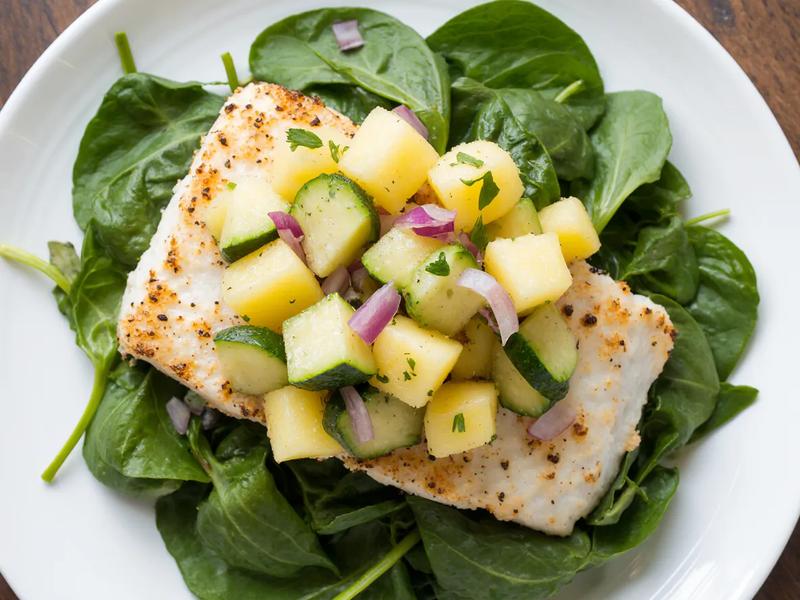 187 calCod with Pineapple Avocado Salsa1 serving
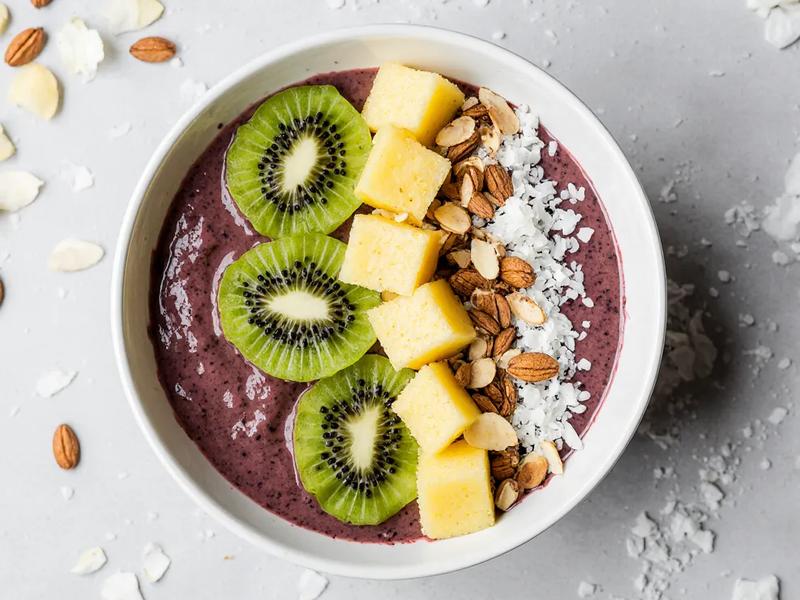 561 calSmoothie Bowl1 serving
 145 calPineapple Ginger Fruit Smoothie1 serving
 468 calVegan Panang Curry with Tofu1 serving
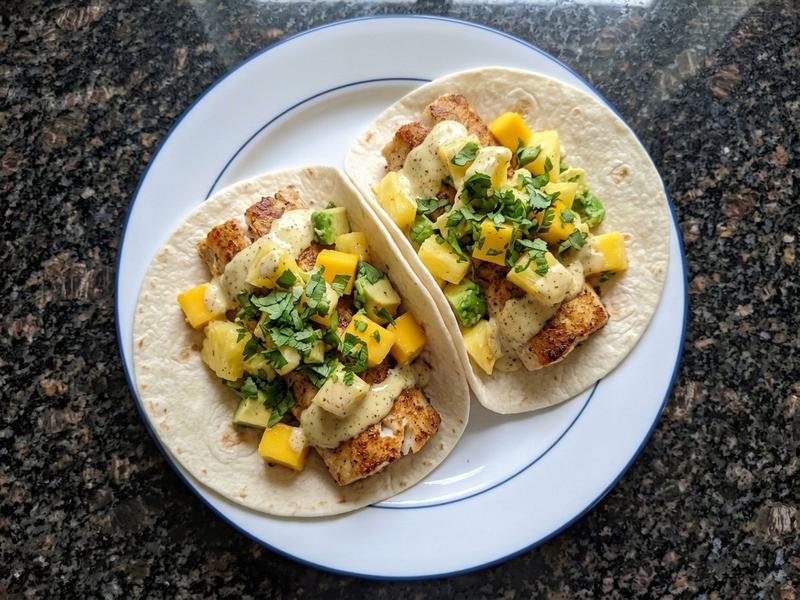 478 calSoft Mahi-Mahi Tacos with Ginger-Lime Dressing1 serving